









Losing your dog is every pet parent’s worst nightmare. One moment they’re in sight, the next moment they’ve disappeared. In most cases they’re back in the blink of an eye, but what happens if not? Follow this checklist to begin your search.
- Five things to do right now
- What to do when your dog has been lost for more than two hours
- What to do when your dog has been lost for more than 24 hours
Sightings and reunions
How to prevent your dog from getting lost in the first place
Five things to do right now
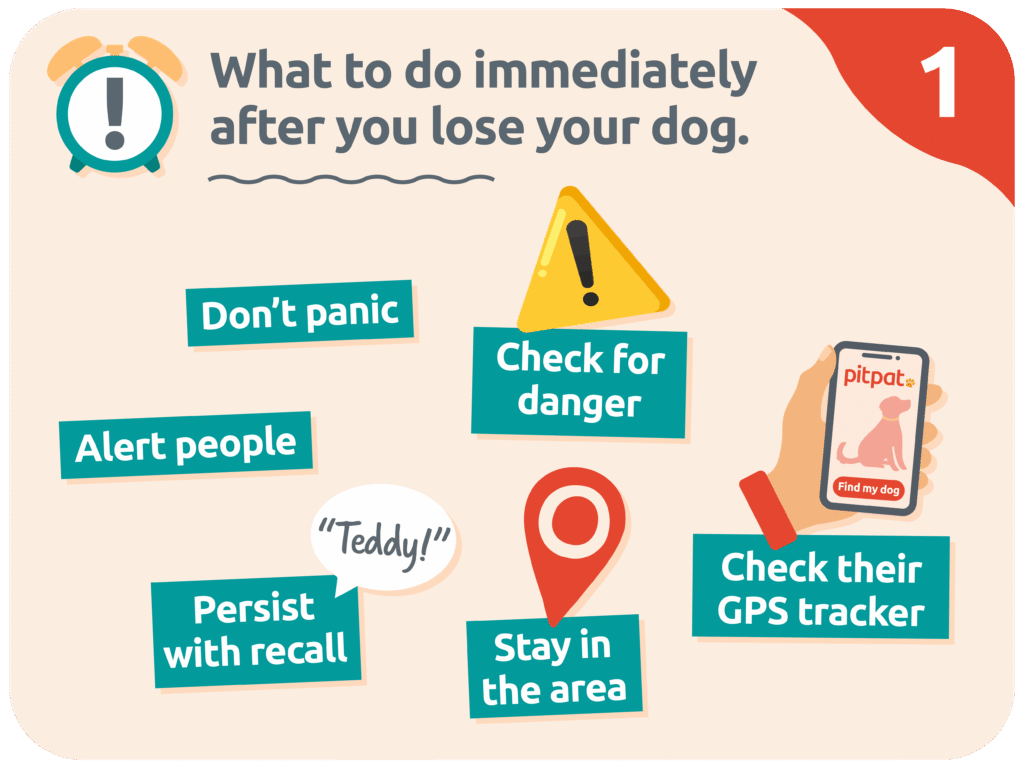
Don’t panic
It’s easy to say, but in the immediate moments after your dog is out of your sight, you have to try to keep a cool head. You’ll be able to make more rational, better decisions that will help you find your dog more quickly.
Stay where you are
Dogs often double back on themselves and return to where they last saw you. Unless you know where they’ve gone, it’s usually best to stay in the same spot they left you.
Check their GPS tracker
If you have a PitPat Dog GPS tracker, now’s the time to use the ‘Find my dog’ button. There can sometimes be a short wait as the device communicates with your phone, so lots of people will start it up at the beginning of their walk so they have a more immediate location. Once it’s found your dog’s location it’ll keep updating regularly, and you can start heading in the right direction to track down your dog.
Check for danger
Quickly assess the environment – is there anything that could be dangerous to you or your dog, such as busy roads or steep cliff faces? Equally, is there anything that your dog could cause a threat to, such as livestock or wild animals?
By being aware of the risks around you, you can try and head off your dog before they reach hazards. Always be aware of your own safety – don’t follow your dog into dangerous areas.
Call out calmly
Even if they seem to be ignoring you, it’s important to keep calling them back. Try not to sound frantic or angry, as this may put them off. Lots of pet parents use a whistle that can carry over long distances, but you’ll need to train this beforehand.
Alert other people
If you see other people on your walk, alert them that your dog is missing – that way, if they spot them, they can help get them back to you.
What to do when your dog has been lost for more than two hours
Often, dogs who have been lost for more than two hours have been found by someone and are being cared for until the owner can be reached.
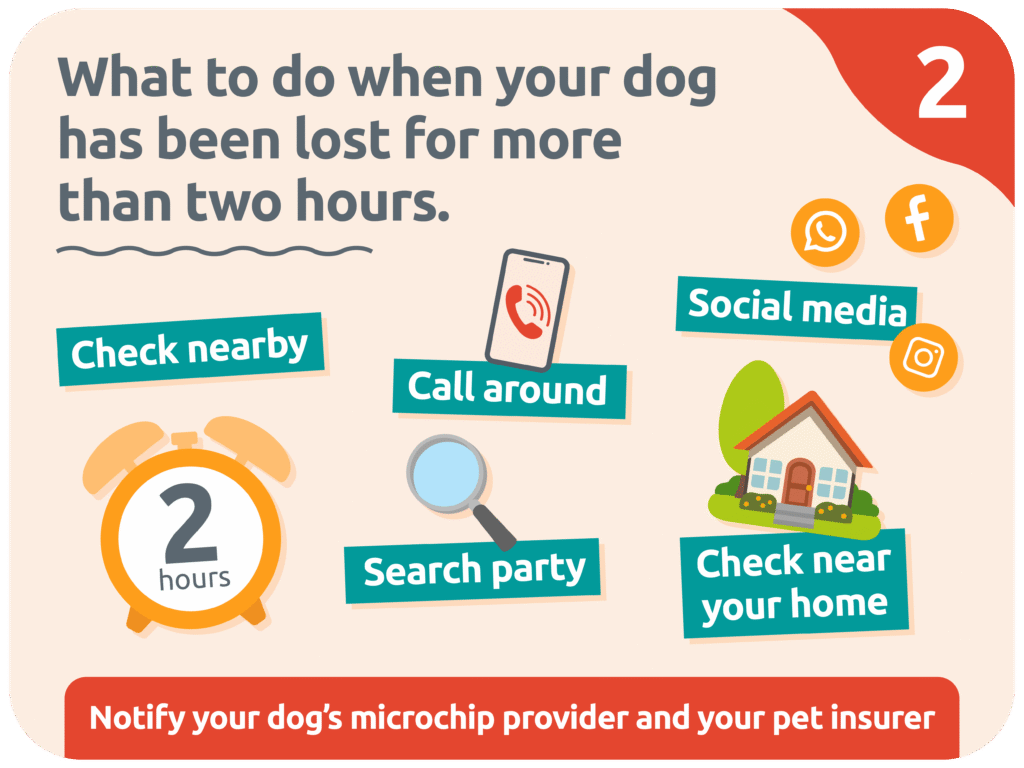
Call local dog wardens, vets and rehoming centres
Get in touch with the dog wardens in both the local authority where you lost your dog and the neighbouring local authorities and report your dog as missing. They’ll be able to take your contact details in case your dog is brought into them. Dog wardens keep all dogs that have been seized by them for at least seven days before sending them to a rehoming centre or having them humanely put to sleep.
It is also wise to contact local vets and rehoming centres in case your dog has been taken there.
Post about your missing dog on local Facebook groups and lost dog groups
If you’re near any residential areas, find the local Facebook and lost dog groups and post about your lost dog on there. Try to include a recent picture and description, as well as the last known location and your contact details.
Make sure to check previous posts on these groups to see if anyone has found your dog already.
Organise a small search party
If you’re able to, call on friends and family locally to come and help search for your dog. Cover both the last known location and as wide an area surrounding it as is practical. Many local search groups and charities also exist to help, including those that can search with thermal drones and trained search dogs.
Don’t call out for your dog – by this point, they may be frightened and more likely to run away from people than come towards them.
Leave out items that smell familiar
If it’s getting late and you need to go home, make sure you leave out clothing that smells of you in the area you lost your dog. Additionally, you could leave a familiar bed or crate, toys and their bowl of water – but don’t leave out food as it will attract other animals. Often, dogs will gravitate towards the familiar smells and settle there until the morning.
Leave your car open or house open
If they’re lost away from home, leave your car running so they recognise the engine noise. Leave the door open and wait quietly.
If they’re lost close to home, leave your gate and a door open overnight, in case your dog makes their way back home.
Notify your dog’s microchip provider and pet insurance company
Many microchip providers and pet insurance companies have processes in place that will give you access to lost and found services, so you can spread the message as far and wide as possible.
What to do when your dog has been lost for more than 24 hours
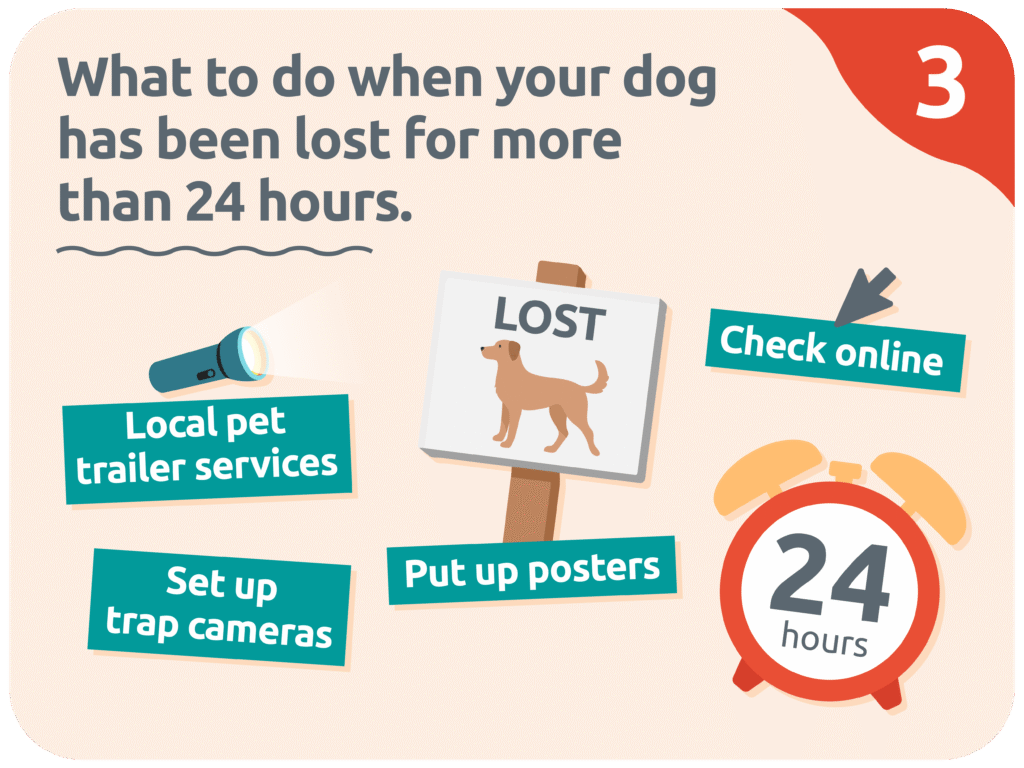
Put up posters in the local area
Posters may seem old school, but they’ll catch the attention of locals and dog walkers in the area your dog went missing. Make sure they use a clear, colour photograph, are laminated to protect against the elements, and are displayed at eye level. Include when and where they were last seen, two contact numbers and instructions not to chase and to call immediately.
Set up trap cameras
Trap cameras are designed to take images when they detect motion and are commonly used for capturing images of shy wildlife. If you have an inkling that your dog is still in a specific area, it could be useful to set up trap cameras along their paths, especially in areas where you’ve left clothing or toys for them. If your dog is picked up on these cameras, you will know if they are still in the area and where they are frequenting.
Check doglost.co.uk
Doglost.co.uk is a free to use site that keeps a database of lost and found dogs across the UK, with a searchable database so you can see if your dog has been found.
Sightings and reunion
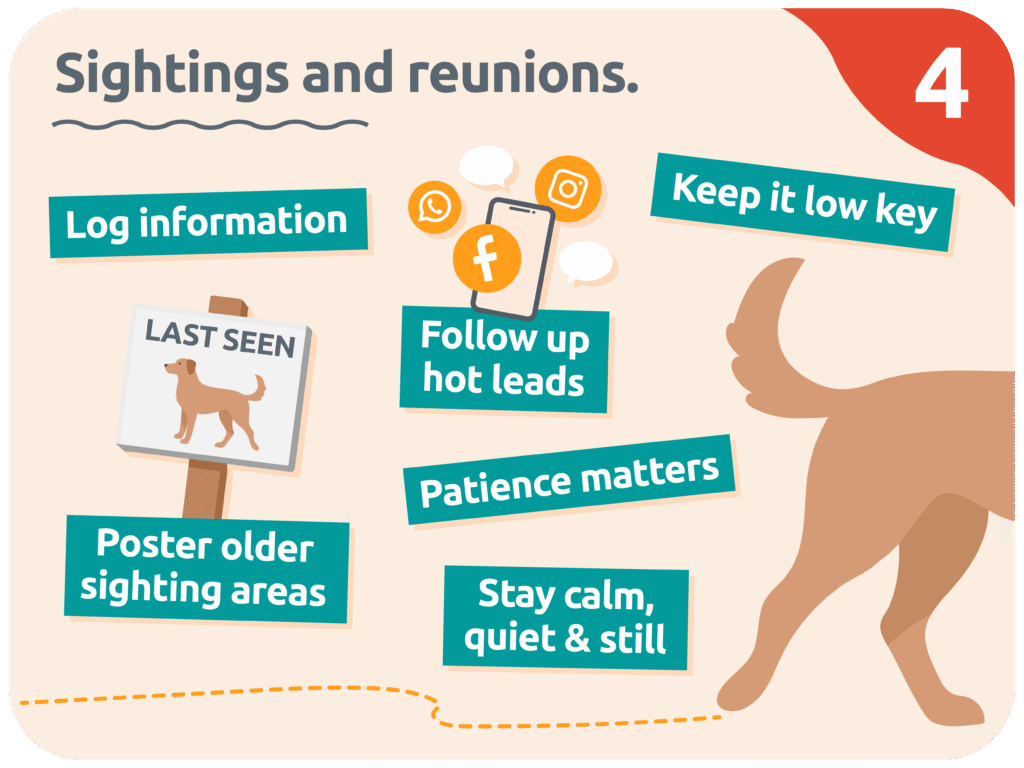
When your dog has been missing a while, it’s important to follow up on sightings.
Log information
Take details of every sighting: location, time, direction, behaviour, who gave you the information and their contact details.
Follow up hot leads
If it’s a current sighting, go alone or with a friend/family member familiar to your dog. Leave food and walk around quietly to leave your scent in the area.
Keep it low key
Avoid lots of people going out – prioritise known family/friends and familiar dogs to keep the search calm and avoid scaring your dog.
Poster older sighting areas
If a sighting is older or unclear, put posters up in the area in case your dog returns or there’s another sighting.
If you see and get close to your dog
- Stay calm, quiet and still.
- Don’t approach them.
- Don’t make eye contact.
- Get low and carefully throw some treats.
- Wait patiently for them to come to you.
Frequently asked questions
Most dogs stay within a 1-2 mile radius of where they went missing, but fear or chasing prey can lead them much further. Often, they’ll try and return to the place they last saw their owner, so it’s best to stay where you are when they first disappear.
While better than nothing, AirTags rely on being near other iPhones. In woods or rural areas, they often fail, as our tests show. A dedicated GPS tracker like PitPat works independently of other phones and has unlimited range as long as there is mobile coverage.
If you lose your dog at night, it can make searching for them extra difficult. If it’s safe to do so, stay in the spot they went missing from – your dog can still navigate well in the dark and may find their way back to you. If you can’t stay because it wouldn’t be safe for you to do so, try and leave out clothing or bedding that smells of you and come back as soon as it’s safe to check if they’ve returned to it.
If you find a lost dog in the UK, first secure it using a lead, if it’s safe to do so. Some lost dogs may be anxious, so don’t approach or call them – let them come to you. If it’s safe to do so, check for a collar and tag which may help you get in touch with the owners. You may choose to post on local Facebook or community groups to help find the owner.
If you can’t approach, the dog has no tag, or you can’t reach the owners, you need to report it to the local dog warden – a quick Google search will help you find a telephone number for them. They’ll advise on next steps, and usually come out to take in the dog and take it to a kennel while they try to reach the owners.
Do not keep a lost dog without reporting it to the local dog warden – this is illegal.
How to prevent your dog from getting lost in the first place
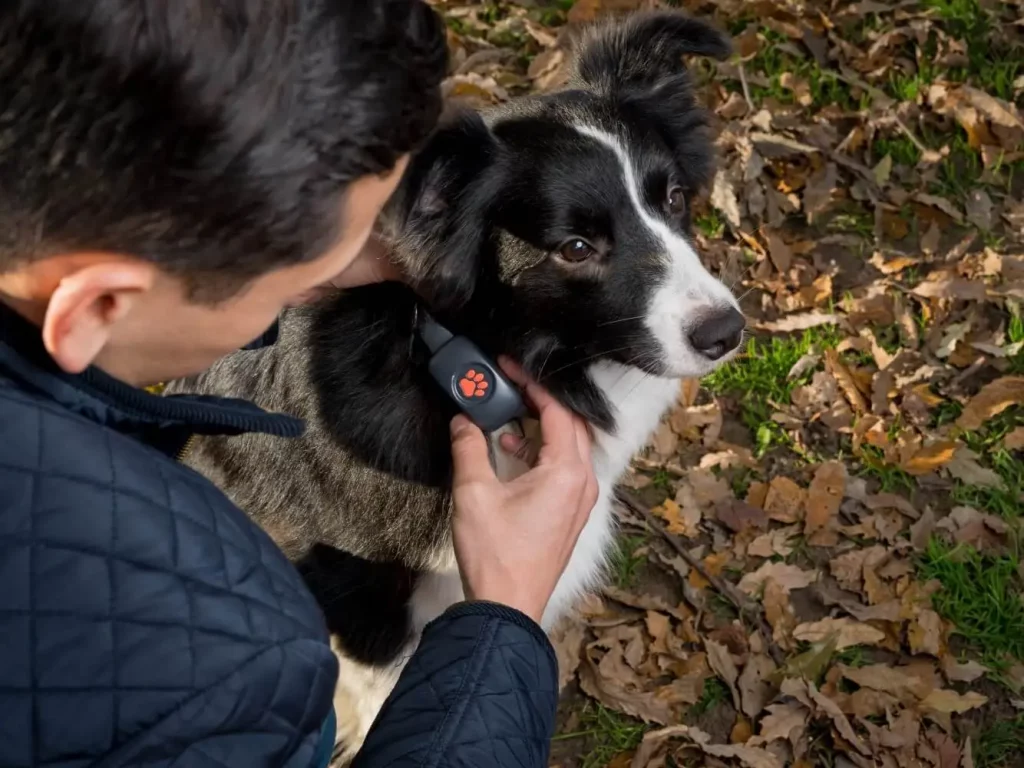
Before you even step out on your walk, there are some preventative steps that you can take to ensure you keep your dog safe.
Train a solid recall
If there’s one skill any off-lead dog must have, it’s a solid recall. There are lots of ways to train your dog to come back on cue, and some dogs pick it up more quickly than others. It’s always a good idea to join a local dog training class to ensure you and your dog start off on the right paw.
Use a PitPat Dog GPS Tracker
Using a PitPat GPS along with training a solid recall is your belt and braces approach to ensuring your dog’s safety. If your dog ignores or misses their recall, their GPS tracker is there to help you figure out exactly where they’ve ended up. It’s the peace of mind that you’ll be able to track them down, even whilst they’re busy following a tempting scent.
Make sure their microchip and tag details are up to date
You always need to ensure that your dog’s microchip and tag details are up to date. Not only is this a legal requirement, but it’s also going to make sure that your dog can be quickly returned to you should they run off.
Use a lead or walk in enclosed areas
If your dog really struggles with recall, it may be best to keep them on a lead most of the time or select safe, fully enclosed areas for them to enjoy off-lead time.
Make a scent article of your dog
If your dog ever goes missing, you may be able to call on the support of highly trained search teams. They need a scent article for their search dogs to work from, so it’s best to have this prepared long before you even need it, in case of an emergency. Read PetTrailers article for information on how to take a scent.
Know your dog
It may sound obvious, but it’s important to know your dog, and how likely they are to run off. Whilst some dogs will happily stick close to you for the entire walk, others can easily get distracted by the exciting things around them, like other dogs or small furry creatures. With that in mind, you’ll need to take a lot more care if your dog is likely to run off chasing a scent.
If it’s your first walk with your dog or you’re exploring a new area, it may be best to keep them on a lead until you reach a safe, enclosed area where you can see how they behave without it.
Losing a dog can be heartbreaking, and we hope you never need to experience it. That’s why PitPat GPS can provide the peace of mind that if your dog does ever go missing, you’ll be able to find them in moments. It’s completely waterproof, fits securely on their collar and has long battery life, so it’s always ready when you need it. Plus, with no subscription to find your dog, it’s cost-effective too.